System Design for
Early Childhood Education in India
This project aims to improve early childhood education (ECE) in India by creating inclusive teaching practices for underprivileged children. By applying strategic design principles and leveraging frameworks, we seek to enhance rural ‘Anganwadi’ centers and prepare children for more effective learning, aligning with UNICEF's vision and contributing to sustainable development goals
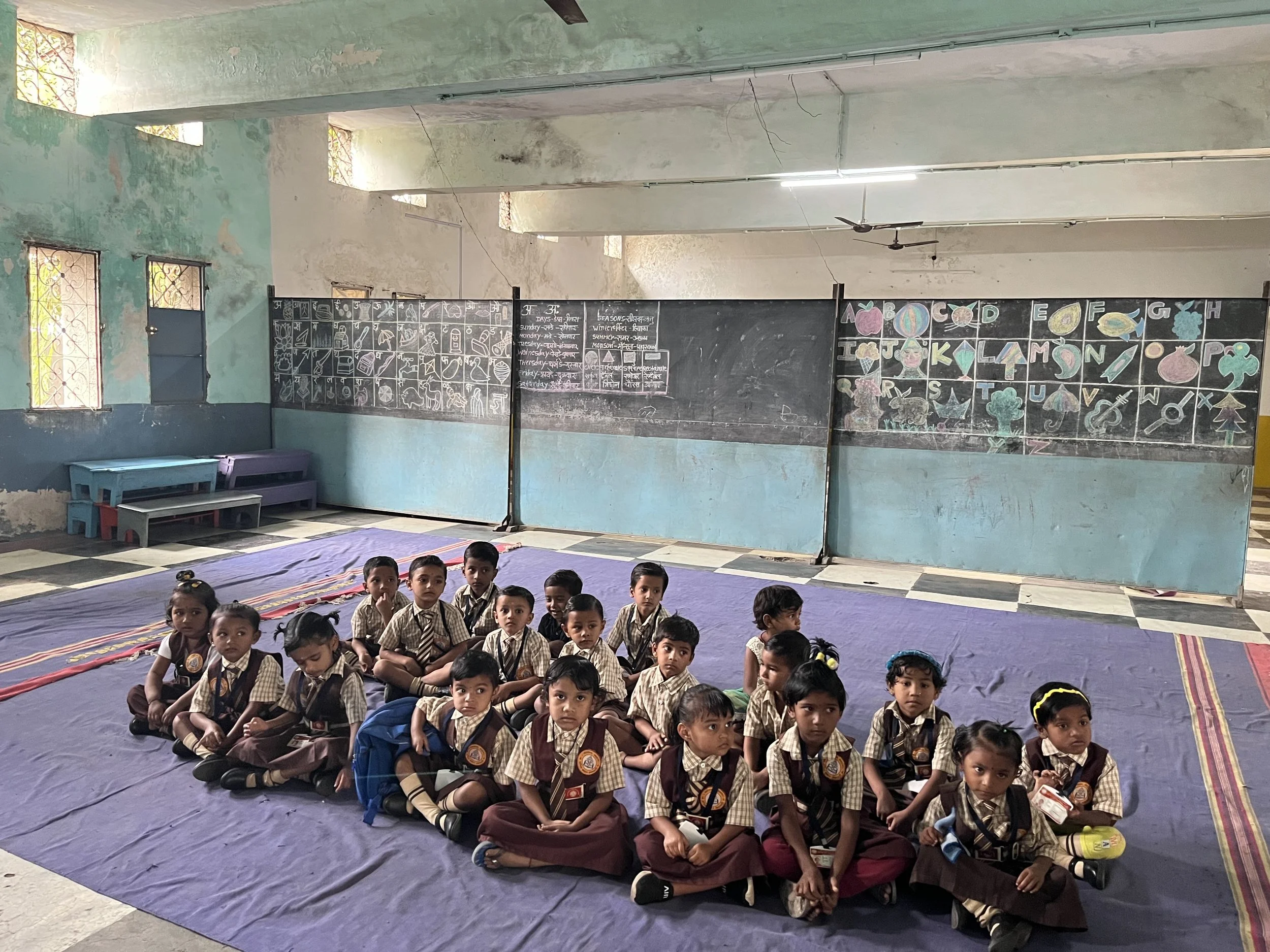
ECCE in India
The India Early Childhood Education Impact study by the ASER center and the Centre for Early Childhood Education and Development reveals that high-quality ECE boosts children's readiness for school and improves their learning outcomes in early primary classes
Early Childhood Education (ECE) in India is provided through various models in both public and private schools, with playschools catering to urban areas and Anganwadis serving rural communities under the ICDS program, focusing on holistic development
Anganwadi centers, established by the Central government in 1975 under the ICDS program, offer early childhood care, education, and health services at the village level, originally aimed at combating child hunger and promoting overall well-being
Currently, there are 13.42 lakh Anganwadi Centers (AWCs) nationwide, serving as key hubs for health, nutrition, and early learning initiatives, with around 82.89 million children under six enrolled in these centers
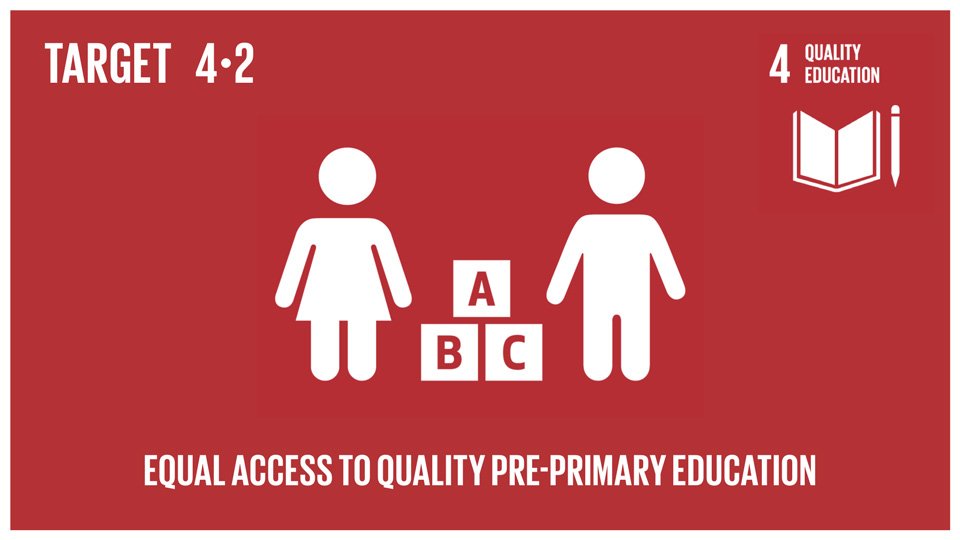
The revised National Education Policy (NEP, 2020) emphasizes a five-year foundational stage of education, including three years of early childhood education (ECE), as a fundamental right for children. The policy adopts a "5+3=3+4" structure, integrating ECE into formal schooling and aiming for universal provision of quality ECE by 2030 to ensure all Grade 1 students are school ready, in line with UN SDG 4.2 stating “Ensure that all girls and boys have access to quality early childhood development, care, and pre-primary education so that they are ready for primary education”
Key Challenges.
The 2018 WDR (World Development Report) argues that the global 'learning crisis' is driven primarily by deficiencies in four key ingredients: unprepared learners, ineffective teaching, inputs that don't reach the classroom and terrible governance.
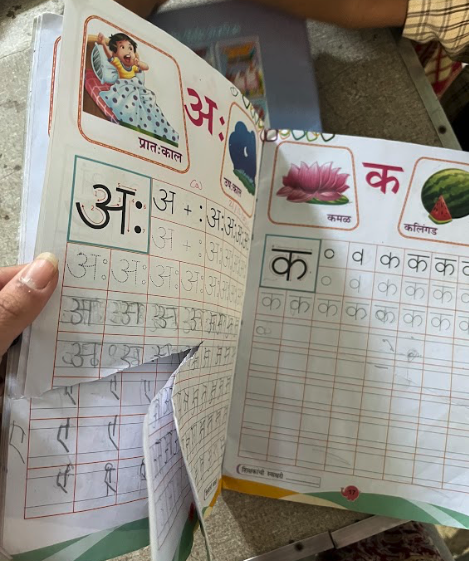
Outdated or irrelevant curricula fail to engage students and meet modern learning needs
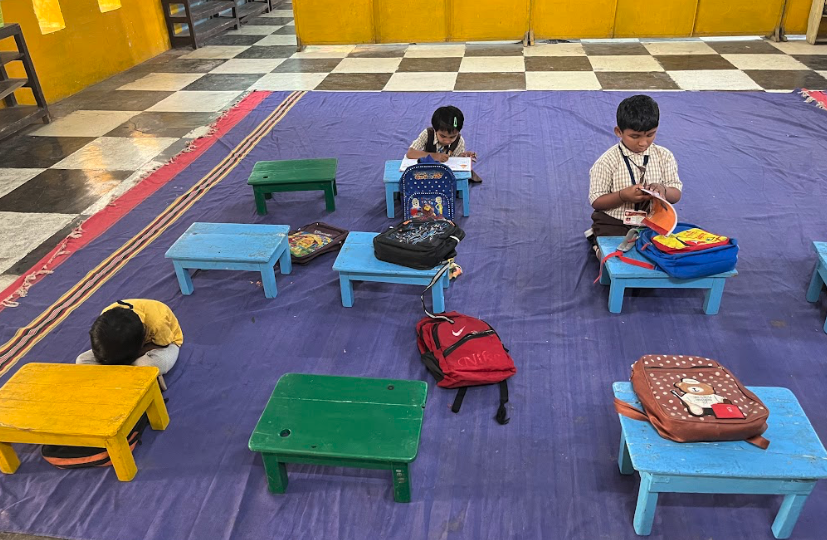
Insufficient engagement of parents and communities affects the creation of supportive learning environments
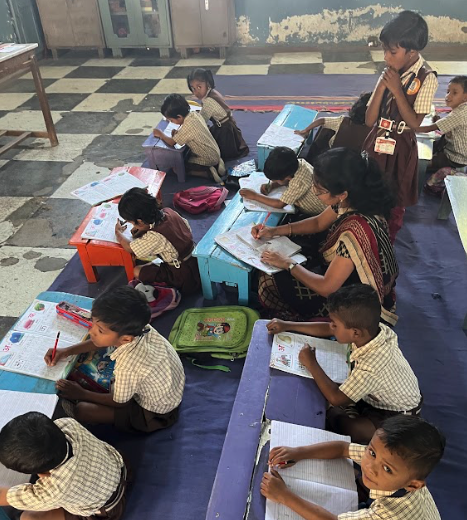
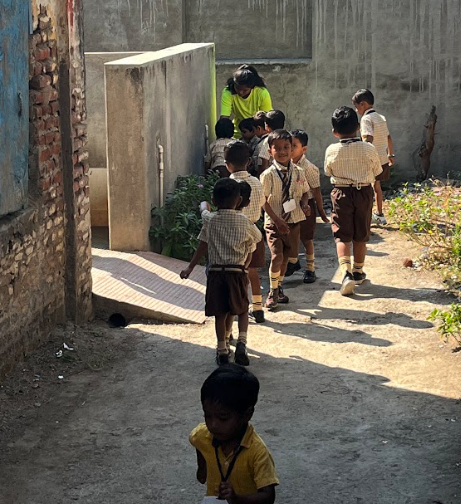
Lack of teacher skills and motivation results in substandard teaching quality
Inefficient governance systems and oversight contribute to mismanagement and lower learning standards in schools
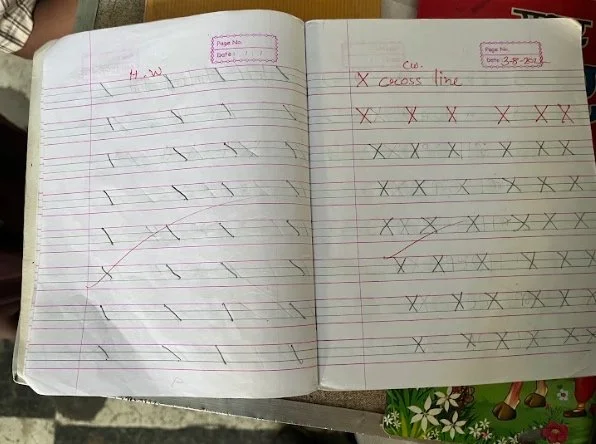
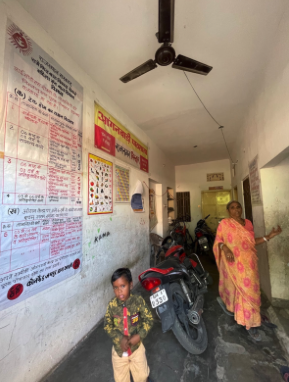
Inadequate resources such as textbooks and technology hinder effective learning environments
School budgets prioritizing salaries over essential learning materials limit student learning opportunities.
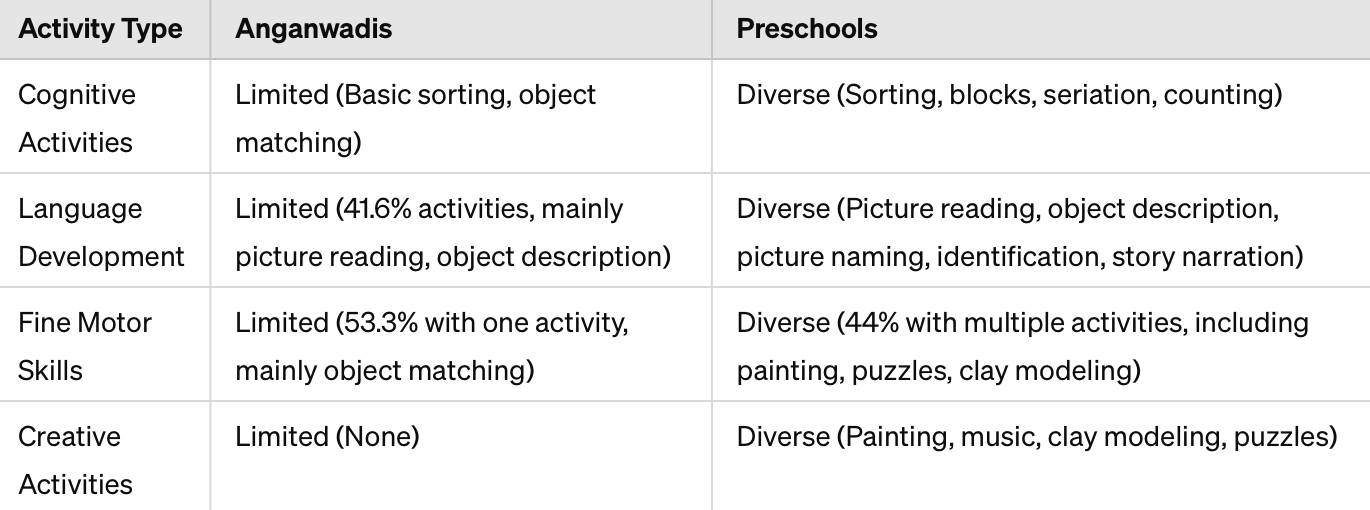
The data indicates that while preschools provided ample opportunities for diverse developmental activities with various teaching materials, Anganwadis were limited in their offerings, particularly in language development and creative activities

Meaning: Foundation
Here's where we come in to provide solutions
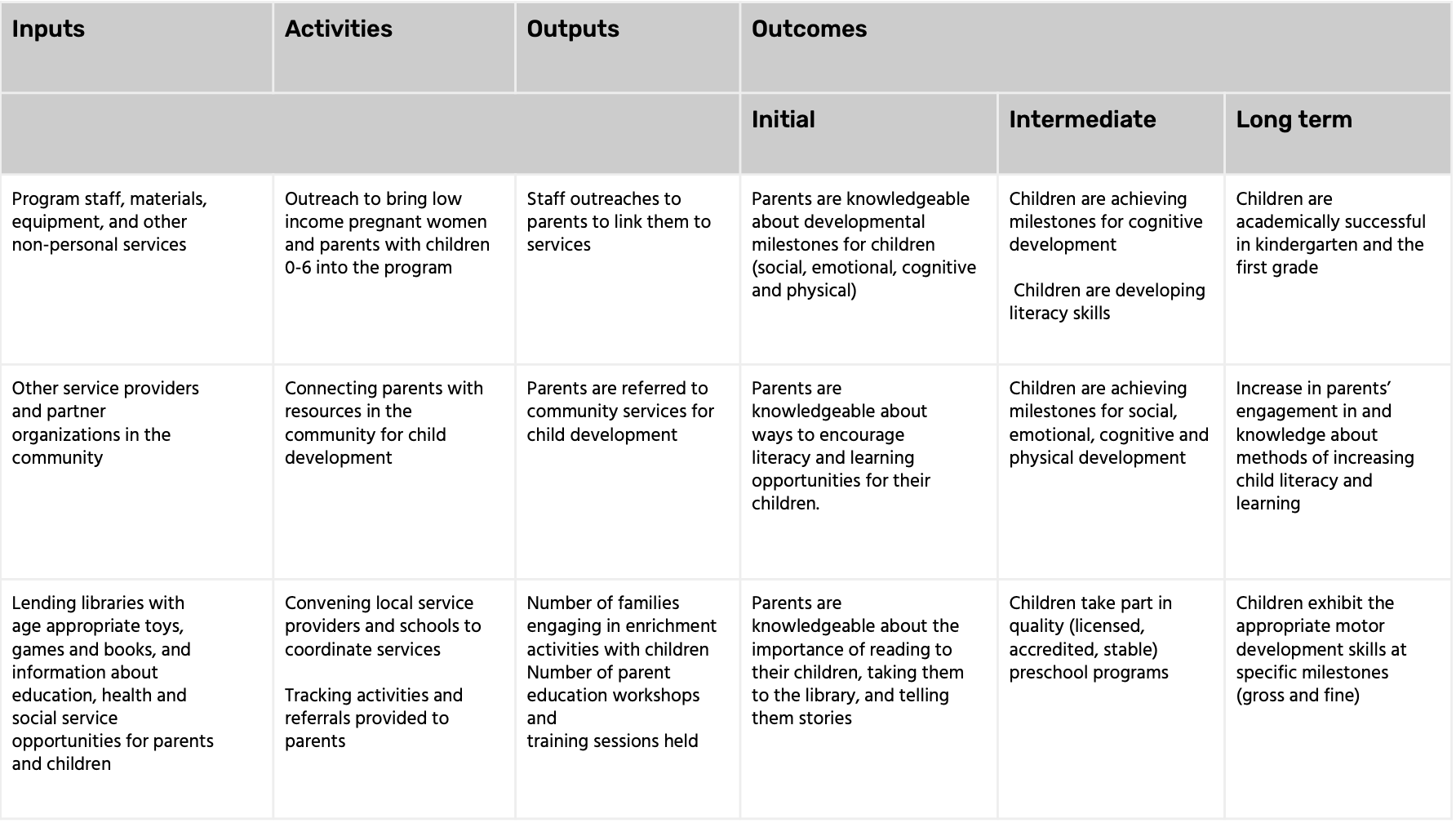
How can innovative teaching methods and positive educational approaches contribute to early childhood education for disadvantaged communities in India, ultimately addressing the gap in school readiness?
Putting this Logic Model into action is our:
PURPOSE
We started with a case study at our Testimonial Site.
Team Buniyaad evaluated the curriculum and teaching strategies implemented for 37 children at Amravati Anganwadi*, with a focus on integrating new, interactive methods such as storytelling to create a more stimulating and effective learning environment for subjects like Mathematics, English, Hindi, and Marathi
*Vanita Samaj, Camp Road, Amravati, MH- 444602
Our First Step.
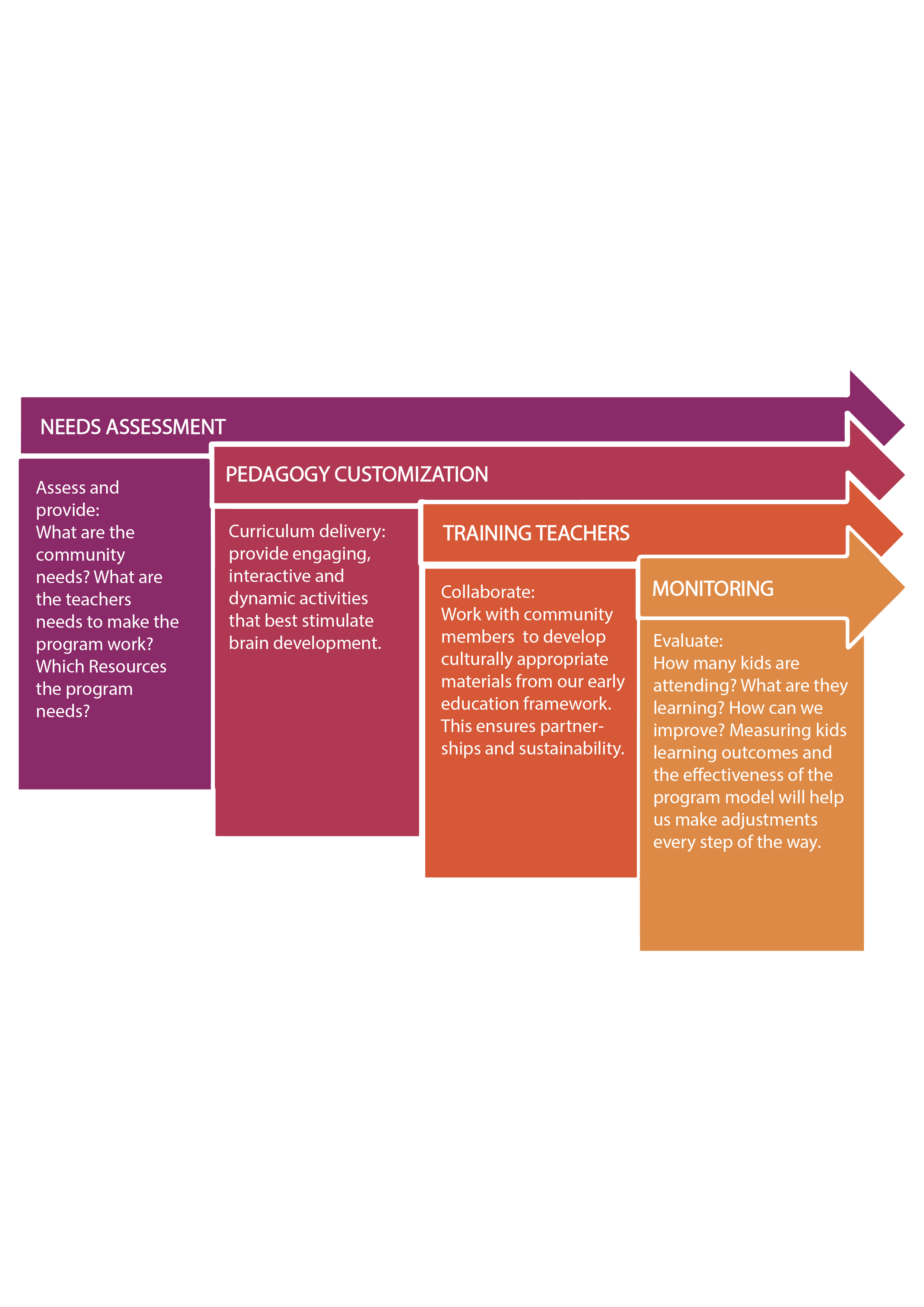
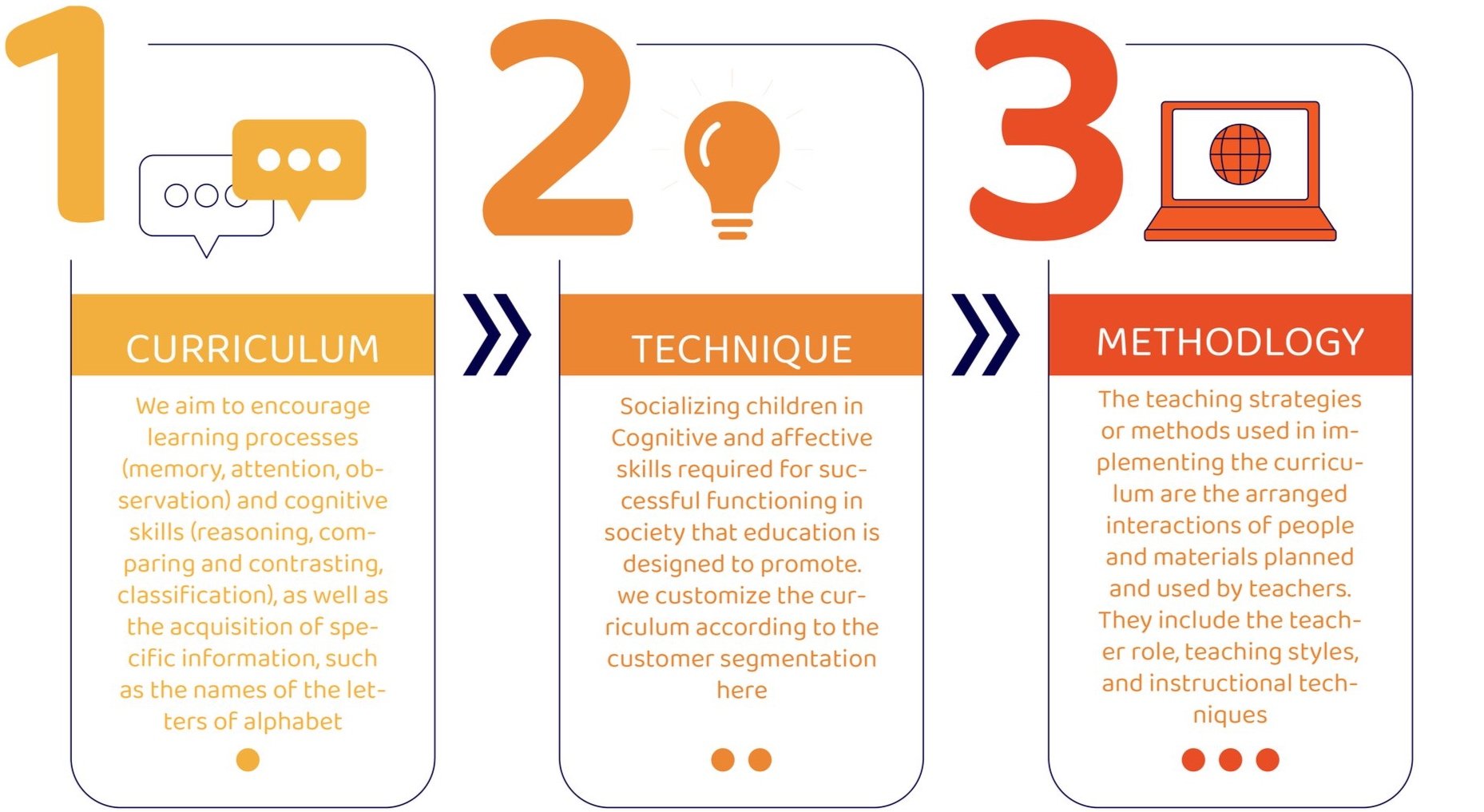
We initiated our process with customizing pedagogy, a step that engaged our stakeholders and served as an impactful starting point in our four-step model
RESULT
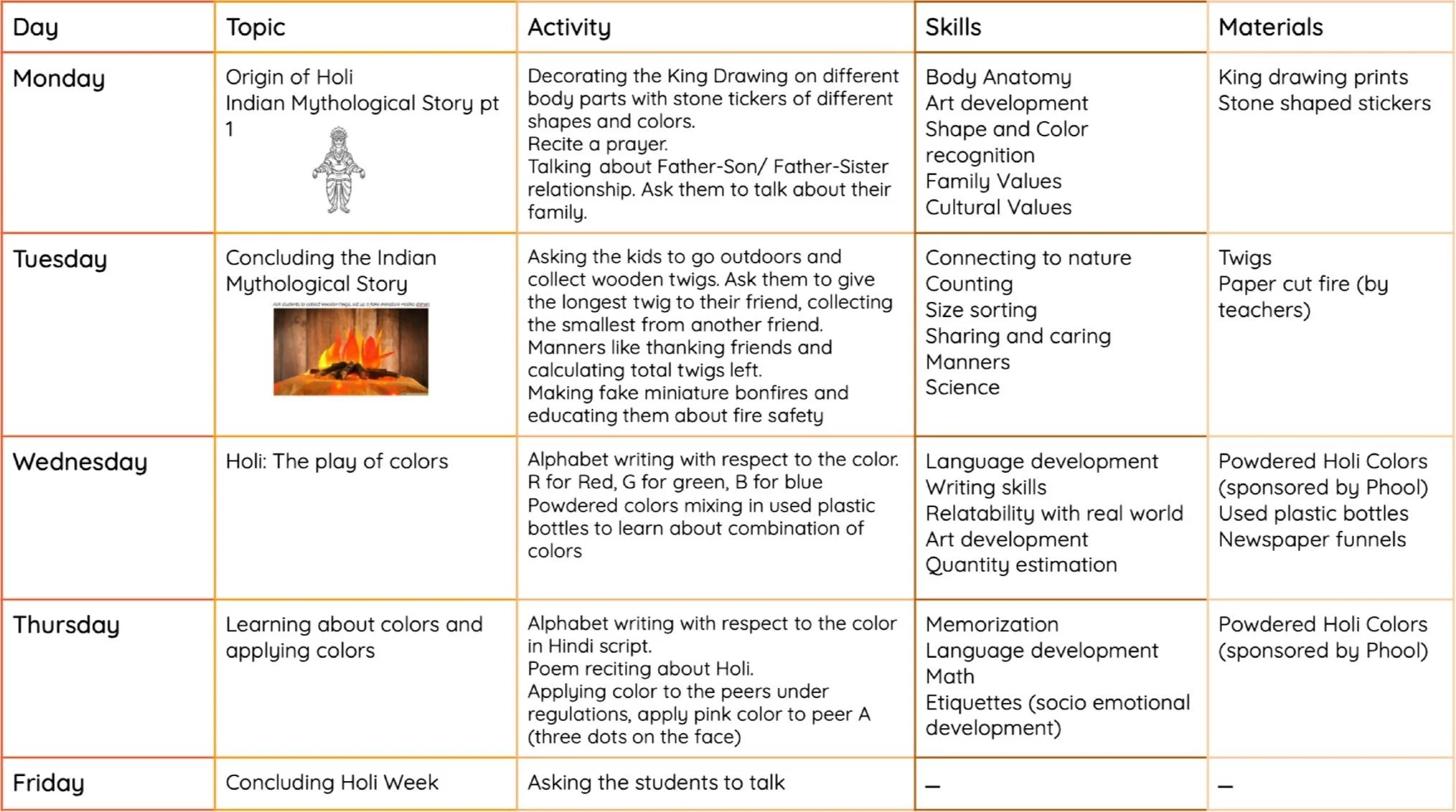
We've finalized and shared our pedagogical prototype with our partner Anganwadi in Amravati, India, centered on Holi festival themes to foster Language, Socio-Emotional, Physical, and Cognitive skills. This approach, integrating construction and inquiry, maintains teacher motivation while actively involving students in a play-based curriculum that leverages community resources cost-effectively, promoting a sustainable circular model

IMPACT
Early childhood development significantly shapes economic, health, and social outcomes for both individuals and society at large. Positive experiences in early childhood education yield long-lasting effects on decision-making and life trajectories into adulthood, as evidenced by extensive studies on the subject. Notably, these effects are most pronounced in children from high-poverty regions, with significantly greater impacts compared to those from low-poverty areas
TEAM: Jahnavi Shah, Deepika Sobti, Maria Martinez
TOOLS & TECHNIQUES: ECCE Policies, Double Diamond Model, Logic Model, STEEPLE Analysis, Partnership Management, Stakeholder Analysis, Curriculum Design, Adobe Suite